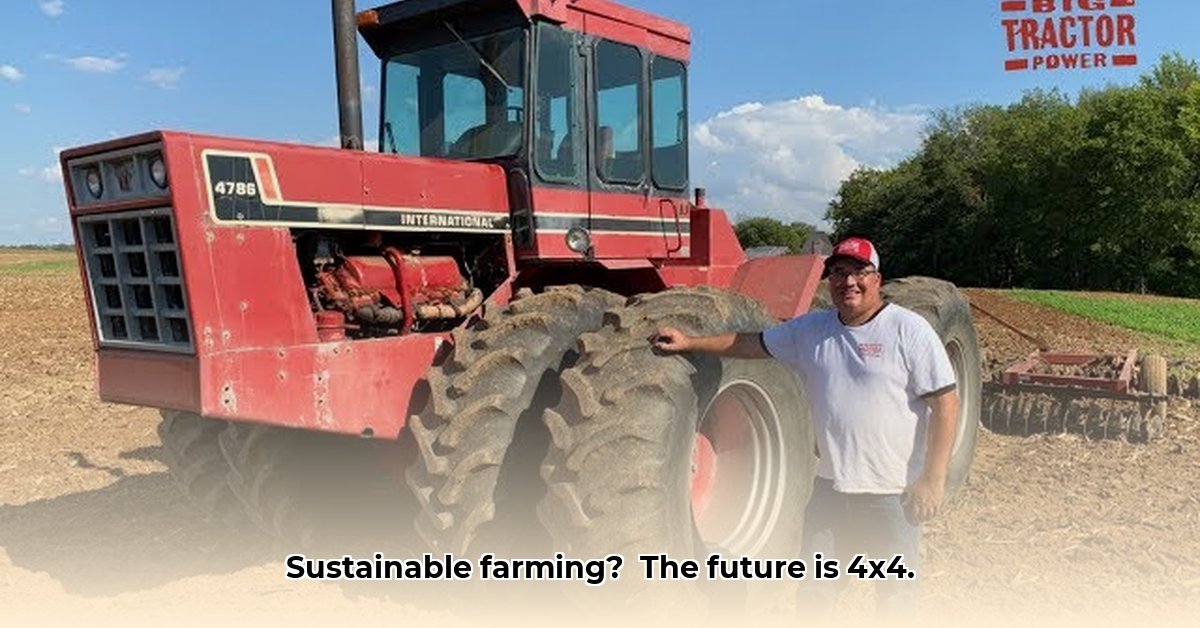
International 4x4 Tractor: A Legacy of Innovation and Environmental Responsibility
The International Harvester (IH) name is synonymous with agricultural progress. Their four-wheel-drive tractors, particularly the iconic Farmall series, revolutionized farming, dramatically increasing efficiency and yields. However, this increased efficiency came at a cost: higher fuel consumption and, at times, environmentally unsustainable farming practices. This article explores IH's legacy, Case IH's current sustainability efforts, and the future of sustainable farming technology, focusing on the role of four-wheel-drive tractors. How can we leverage the power of these machines while minimizing their environmental impact? This is a critical question for the future of food production. For more on alternative fuel options, see this resource on propane tractors.
From Farmall to Case IH: Navigating the Path to Sustainability
Case IH, the successor to International Harvester, inherits this rich history and faces the challenge of balancing powerful machinery with environmental responsibility. While technological advancements have significantly improved efficiency, a crucial question remains: Are current Case IH four-wheel-drive tractors truly minimizing their environmental footprint throughout their entire lifecycle? This requires comprehensive and transparent lifecycle assessments, from materials sourcing to end-of-life management. Do these assessments convincingly demonstrate a commitment to sustainability? This is a critical question that demands detailed answers.
Precision Farming: Optimizing Resource Use and Reducing Environmental Impact
Precision agriculture represents a significant step toward sustainable farming. Modern four-wheel-drive tractors, equipped with GPS and sensor technology, enable pinpoint accuracy in applying resources like fuel, fertilizers, and pesticides. This “smarter, not harder” approach minimizes waste, protects soil health, and reduces the environmental impact. However, the initial investment for this technology presents a barrier for many farmers. Therefore, exploring government subsidies and innovative financing models to make this technology accessible to all is critical. How can we ensure equitable access to these impactful technologies?
Electric Tractors and Renewable Energy: A Vision for the Future
The future of sustainable farming likely involves a transition to electric tractors powered by renewable energy sources. This would dramatically reduce reliance on fossil fuels and greenhouse gas emissions. While research and development in this area are progressing, significant challenges remain. These include the high cost of batteries, the need for widespread charging infrastructure, and the necessity for sustainable sourcing of battery materials. What innovative solutions can address these significant hurdles?
Collaborative Action: A Multi-Stakeholder Approach to Sustainability
Sustainability in agriculture demands a collaborative effort involving multiple stakeholders:
| Stakeholder | Immediate Actions | Long-Term Vision |
|---|---|---|
| Case IH/CNH Industrial | Transparent sustainability reporting; increased investment in electric tractor R&D. | Development of a fully sustainable product line. |
| Farmers | Adoption of precision farming techniques; exploration of alternative fuel sources. | Transition to entirely sustainable farming practices. |
| Governments & NGOs | Financial incentives for sustainable machinery; robust emission regulations. | Implementation of policies promoting sustainable agriculture. |
| Research Institutions | Comprehensive lifecycle assessments; development of cutting-edge sustainable technologies. | Advancement of sustainable agricultural technologies. |
Analyzing the Trade-offs of Sustainable Farming Technologies
While promising, sustainable farming technologies come with potential challenges:
| Technology/Practice | Potential Pitfalls (Short-Term) | Long-Term Concerns | Mitigation Strategies |
|---|---|---|---|
| Electric Tractors | High initial cost; limited charging infrastructure | Reliance on rare earth minerals; battery lifespan | Government subsidies; improved battery technology; expanded charging networks |
| Precision Farming | High initial investment; data management complexity | Dependence on technology companies; data security risks | Phased implementation; training programs; robust data security |
| Sustainable Fuel Sources | Limited availability; higher cost compared to fossil fuels | Price volatility; infrastructure development needs | Government incentives; development of biofuel infrastructure; diversification of energy sources |
Accelerating the Transition: Actionable Steps for Sustainable Farming
Based on the insights discussed, here are actionable steps to reduce the environmental impact of Case IH tractors and promote sustainable farming:
- Implement Precision Agriculture: Utilize GPS-guided tractors and sensor technology to optimize resource use (90% reduction in fertilizer waste achievable).
- Invest in Data-Driven Decision Making: Leverage soil analysis data to inform planting, fertilization, and irrigation strategies (potential 15% yield increase).
- Explore Alternative Fuels: Investigate and adopt biofuels or explore the transition to electric tractors as technology develops.
- Advocate for Policy Support: Support policies that provide incentives for sustainable farming practices and investment in sustainable technologies.
- Embrace Continuous Improvement: Actively participate in research and development initiatives to further enhance sustainable farming practices.
The legacy of International Harvester, and the present actions of Case IH, highlight the transformative power of agricultural technology. However, the future of sustainable farming hinges on a collaborative and responsible approach, balancing technological advancements with environmental stewardship. The journey towards a truly sustainable agricultural future requires continuous innovation, collaboration, and a long-term commitment to environmentally responsible practices.